A small living room is rarely a problem of square footage — it is usually a problem of arrangement. A poorly placed sofa can block the flow, oversized furniture can swallow the room, and clutter can make an adequate space feel tiny. Here is how to lay out a small living room so it feels bigger.
Start with a single focal point
Every good room has one thing the eye settles on. In a small living room, that is usually the seating area or a window. Choose your focal point and arrange the furniture toward it, rather than scattering pieces against every wall.
Choose the right sofa
The sofa is the single biggest item, so it dictates the room.
- Pick a sofa with slim or raised legs — visible floor space underneath makes the room feel open.
- Avoid bulky, overstuffed, skirted sofas that block the floor.
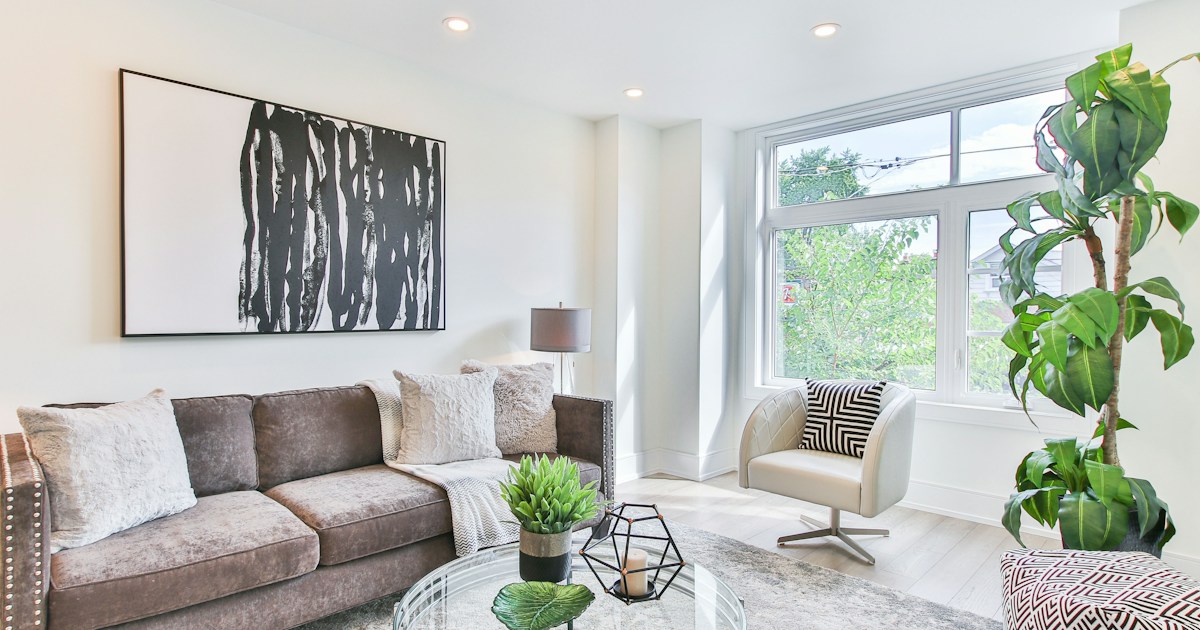
- A compact two-seater or a loveseat with a separate armchair often seats as many people as a giant three-seater while taking less visual space.
Float furniture (selectively)
A small room does not mean everything must be pushed against the walls. Pulling the sofa slightly off the wall and adding a slim console behind it creates depth and a little extra storage — but leave clear walkways, ideally at least 70cm of passage.
Use a rug that is big enough
A rug that is too small is one of the most common small-space mistakes. The rug should anchor the seating group — the front legs of the sofa and chairs should sit on it. A small rug floating in the middle of a big floor visually shrinks the room.
Lift the eye vertically
Drawing the eye upward makes a room feel taller and more spacious.
- Hang curtains close to the ceiling and let them fall to the floor.
- Mount a tall, slim bookshelf rather than a low wide one.
- Hang art slightly higher than you think.
- Use a statement pendant light rather than a low floor lamp.
Choose nesting or multi-functional pieces
- Nesting tables tuck away and expand when guests come.
- An ottoman with hidden storage doubles as a footrest, coffee table, and blanket store.
- A wall-mounted media console frees up floor space.
Keep the center clear
The middle of the room is where you feel the space most. Keep walkways open and avoid placing a large, heavy coffee table that blocks movement. A small round table or a pair of small stools is easier to walk around.
Add light and let it in
A dark room feels small. Use sheer curtains that filter light rather than heavy ones that block it, add mirrors opposite windows to bounce light, and layer table and floor lamps so the room is evenly lit.
Edit, then edit again
A small living room cannot absorb endless objects. Choose a few pieces you love, keep surfaces clear, and let the room breathe. Space is the one thing that, when created, makes every other piece look better.
With a thoughtfully scaled sofa, the rug sized correctly, the eye drawn upward, and clutter kept in check, a small living room will feel far more generous than its dimensions suggest.